
Establishing the Care Work Partnership’s vital Working Groups – an update from Care Work’s Community Involvement and Engagement team




Kritika Samsi (Senior Research Fellow, King’s College London)
Nicky Taylor (Research Fellow, Leeds Beckett University)
Claire Surr (Professor of Dementia Studies and Director of the Centre for Dementia Research, Leeds Beckett University)
Liz Jones (Deputy CEO and Policy Director, National Care Forum)
Katherine Moss (School of Health Secretary, Leeds Beckett University)
January 2026
The Care Work Research Partnership offers an exciting opportunity for frontline care and support workers and people who access social care services to direct research priorities and shape research projects. A commitment to community involvement and engagement (CIE) underpins the whole of the Partnership, from representation on the Study Steering Group to individual project research teams. Ongoing collaboration with people with lived experience and staff experience of social care is consistently achieved through two Working Groups: one comprised of care and support workers and another comprised of people who access Adult Social Care services.
When Care Work began in April 2025, we designed recruitment materials for both Working Groups and advertised these through a wide variety of networks for social care staff and for people accessing services. We encouraged people who were interested in Care Work’s aims to apply for a role using a simple form to tell us about themselves and their experience. We then shortlisted and interviewed an incredibly diverse range of applicants. We focused on forming a representative group, in terms of geography, gender, age, socio-economic status, ethnicity, disability, and experience of working in or using different types of social care services.
Initial Working Group meetings were held in June 2025 to meet and get to know each other, to build trust and crucially to start to define our approach to working together. Discussions to form our collective ‘Ways of Working’ document focused on agreeing key values that each attendee commits to bring to meetings, such as inclusion, respect, honesty, patience and kindness, as well as how to share time fairly and embracing differences.
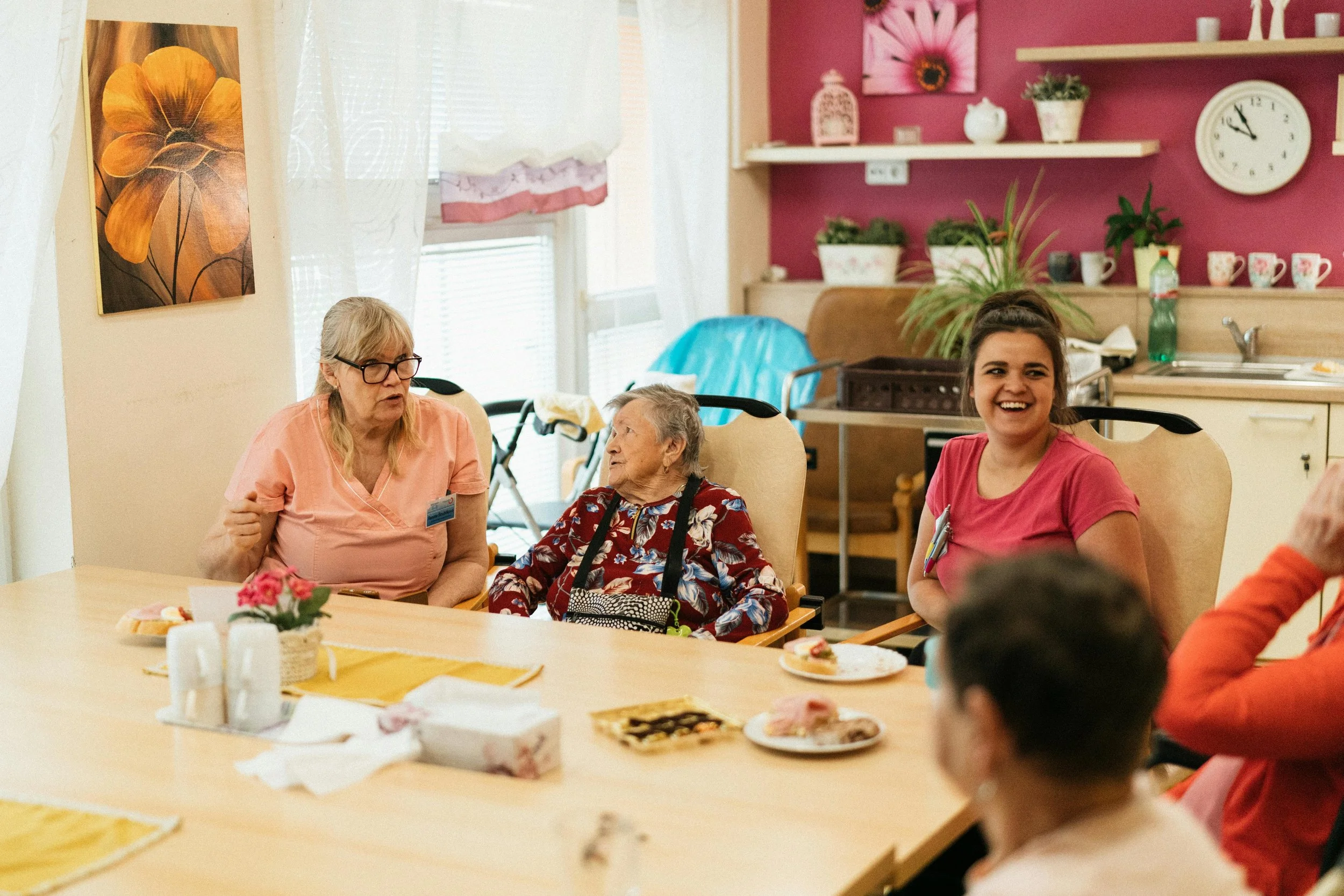
Stock image - “Seniors by Table in Nursing Home”
by Jsme MILA, Source: Pexels
We agreed on practical commitments such as using clear communication without jargon or acronyms, supporting individual access requirements, sharing documents two weeks in advance of meetings, group members arriving at meetings fully prepared, and switching on our cameras during online meetings for authenticity, engagement and friendliness. After three meetings and several drafts we now have a Ways of Working agreement which guides our approach, supports members of the Working Groups to engage fully, and holds us all to account.
Mala, a Lived Experience Working Group member, said: “I have really appreciated being involved in the Working Group and the care, thought and respect that has gone into creating shared spaces where lived experience is genuinely valued. It already feels like the partnership is shaping the research in meaningful ways, particularly by grounding discussions in real world experiences and helping to surface issues that might otherwise be overlooked.”
We meet every two months and are collaborating actively with the Working Groups to agree the studies we will prioritise working on in the Care Work Partnership. We are conscious that time and expertise is valuable, so group members are rewarded for this at National Institute for Health and Care Research (NIHR) involvement rates. We will use a training budget to support the learning and development of Working Group members across the five years of the Partnership, equipping them with relevant skills and supporting new ideas that contribute to research processes. We’ll be sharing more blogs about the Working Groups’ achievements, including our process of working together over the longer-term Partnership and detailed reflections from Working Group members on their expectations and roles within the research.
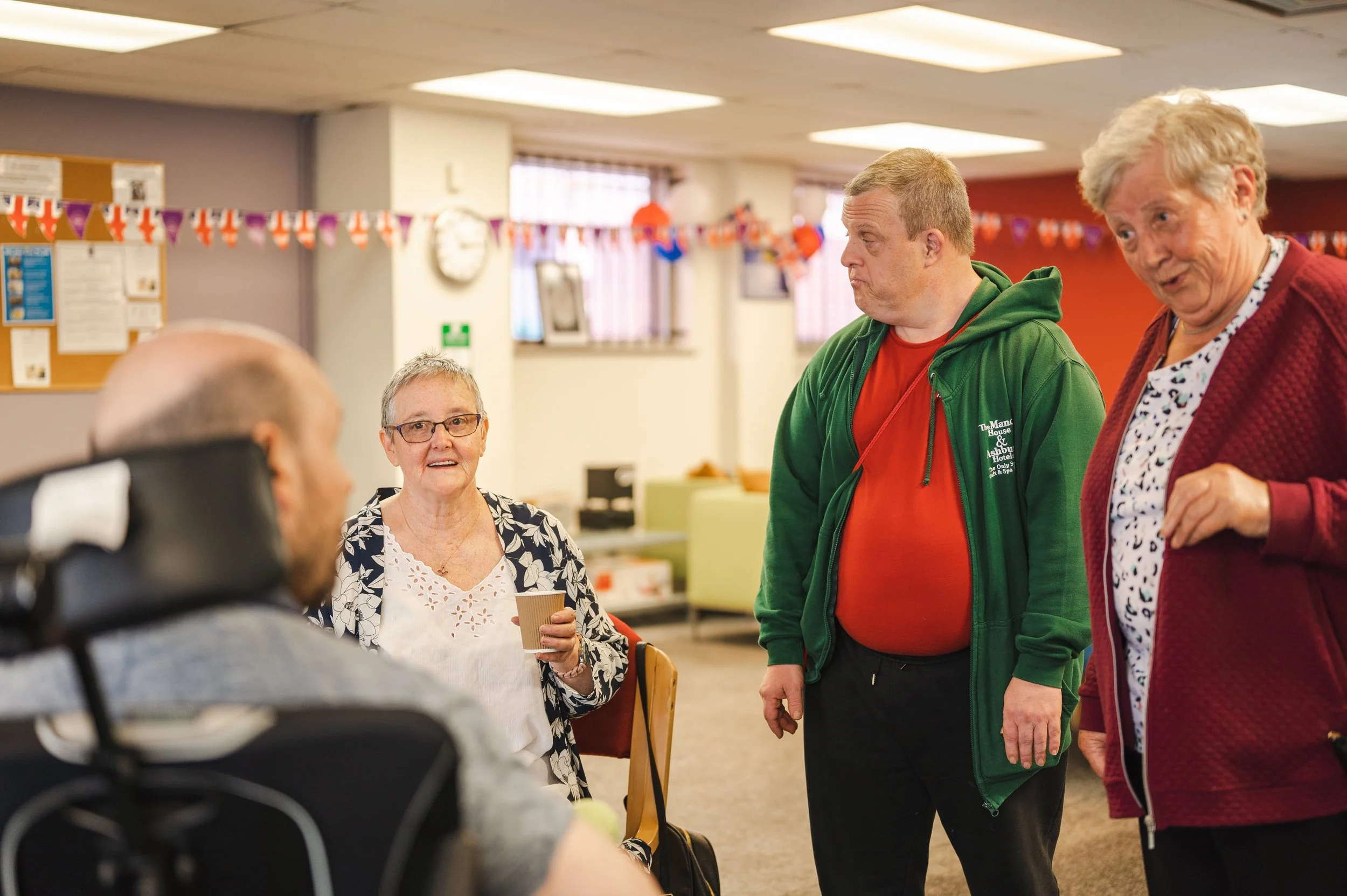
Stock image - “Carers Centre Tower Hamlets”
Source: Age Without Limits
As part of our programme of community involvement and engagement work, we host a voluntary Community of Practice (CoP) that is open to anyone interested in social care. This group meets online for monthly webinars and discussion, with topics including delegated healthcare tasks in social care, and workforce wellbeing.
If you have lived or staff experience of Adult Social Care, you are welcome to join Care Work’s Community of Practice by completing this CoP consent form. Our next Community of Practice webinar focuses on Digital Technology in Adult Social Care, will take place via Teams on Tuesday 10th February 2026 at 12:30-13:30.